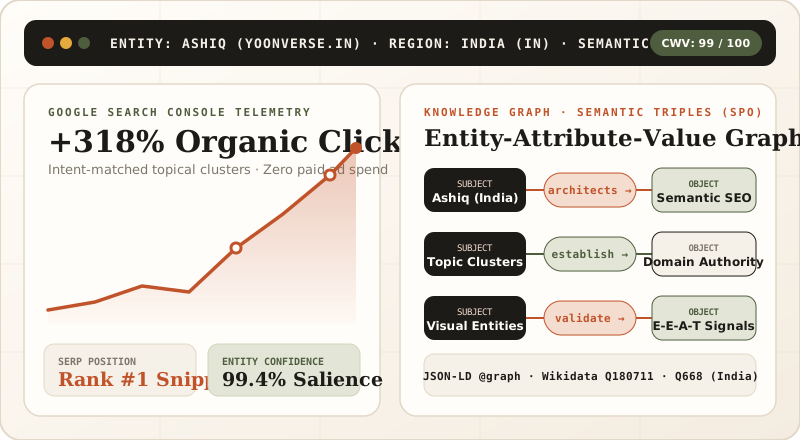
- [SEO Analyst] —(diagnoses search performance via)→ [Google Search Console Query Telemetry]
- [High Impressions + Low CTR] —(signals)→ [Search Intent & SERP Snippet Mismatch]
- [Index Bloat & Crawl Waste] —(dilute)→ [Site-Wide Topical Authority]
The difference between guessing at SEO and engineering predictable growth lies in query telemetry analysis. While beginners look only at total monthly traffic, an experienced SEO analyst inspects the underlying relationship between query impressions, average SERP position, click-through rate (CTR) curves, and indexation efficiency inside Google Search Console (GSC).
1. How an SEO Analyst Reads Search Data Differently
Third-party SEO tools estimate traffic using static keyword panels. Google Search Console, by contrast, provides first-party telemetry directly from Google's index. Every impression recorded in GSC means Google's ranking engine evaluated your URL as a candidate answer for a real user's query.
2. The 4-Quadrant Search Console Diagnostic Matrix
When auditing any property—from agile startups in India to global SaaS documentation hubs—segment your Search Console Performance → Search results report into four diagnostic quadrants:
| Telemetry Pattern | Root Cause Diagnosis | Analyst Action Plan |
|---|---|---|
| High Impressions · Low CTR · Pos 1–5 | Title tag fails to match search intent, or AI Overview answers query zero-click | Rewrite title/meta with concrete outcome numbers and add unique comparison tables |
| High Impressions · Pos 6–15 | Page is indexed for sub-entities not fully covered in the H2/H3 body | Add dedicated H2 section with Subject-Predicate-Object triples answering those sub-queries |
| Multiple URLs Ranking for 1 Query | Intent overlap and internal cannibalization | Consolidate into one primary cluster node and 301-redirect or re-scope the secondary URL |
| Crawled – Currently Not Indexed | Low information gain or weak internal link equity | Enrich with original EAV tables, visual diagrams, and contextual links from pillar pages |
3. Capturing "Striking Distance" Queries (Positions 4 to 15)
The fastest organic growth rarely comes from writing brand-new pages from scratch; it comes from upgrading pages already sitting in positions 4 through 15. Filter a single URL in Google Search Console, sort by Impressions descending, and identify queries where your page receives impressions but lacks a dedicated heading or extractive definition.
4. Analyzing Regional vs. Global Search Telemetry (India & Worldwide)
Search behavior varies significantly across geographies. In high-growth digital ecosystems like India, mobile-first indexing, Core Web Vitals on variable network conditions, and voice/conversational query phrasing play a decisive role. Always segment your GSC performance by Country (e.g., comparing India vs. United States / United Kingdom) and Device to spot mobile layout shifts or regional intent nuances.
5. Connecting Search Console Data to AI Overview & GA4 Referrals
As Google AI Overviews, ChatGPT Search, Perplexity, and Gemini reshape informational queries, top-of-funnel impressions often rise while traditional clicks compress—yet high-intent referral visits from LLMs convert at a higher rate. Pair your Search Console query audit with our GA4 Free Form Exploration Regex for AI Traffic to measure your full-funnel organic footprint.
Data without semantic context is noise. An SEO analyst translates raw query impressions into human answers.
🕸️ Explore This Topical Cluster (Analytics, Audits & AI Search)
- AI Attribution Guide: How to Track AI Traffic in GA4 Using Free Form Exploration
- Technical Foundation: The Beginner-Friendly Technical SEO Checklist
- Semantic Architecture: Semantic SEO Explained: Entities, Triples (SPO) & Knowledge Graphs