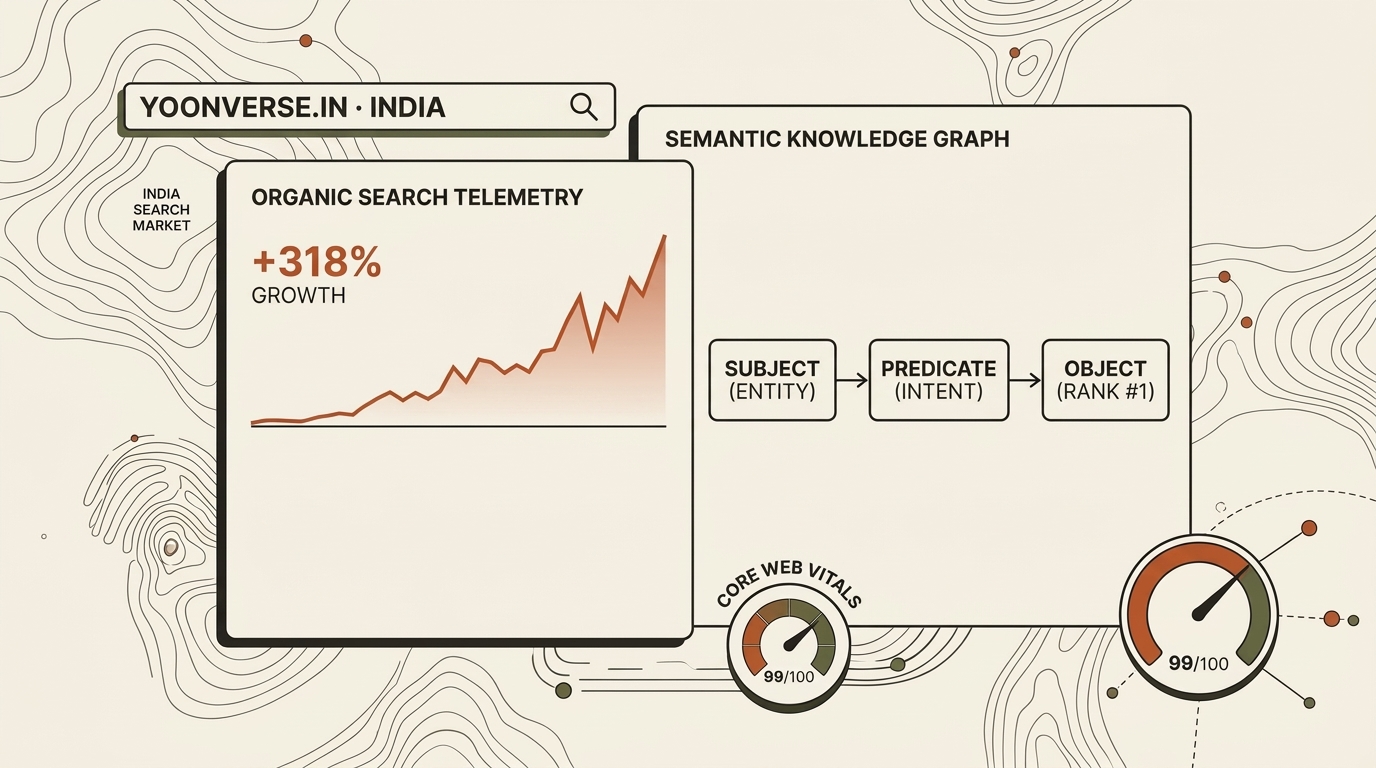
- [Topical Authority] —(measures completeness of)→ [Domain Entity & Attribute Coverage]
- [Contextual Internal Links] —(pass semantic relevance between)→ [Pillar & Cluster URLs]
- [One Distinct Search Intent per URL] —(eliminates)→ [Keyword Cannibalization]
Topical Authority is a site-wide ranking state achieved when a domain comprehensively covers every core entity, sub-topic, and user question within a specific subject area. Instead of publishing random, disconnected blog posts, an SEO strategist designs a Semantic Content Network where every article strengthens the ranking power of every other article.
1. What is Topical Authority in Modern Search?
Why does a focused specialist website often outrank a massive general news portal for technical queries? Because search engines evaluate topical completeness. When Google sees that your domain answers beginner fundamentals, intermediate workflows, advanced edge cases, and analytical diagnostics for a single subject, it trusts your domain as a primary source.
2. The Pillar-and-Cluster Architecture Explained
A topical cluster consists of three structural components:
- The Pillar Hub (Macro Node): A comprehensive guide that defines the broad entity and introduces its core sub-dimensions.
- Cluster Spokes (Micro Nodes): Dedicated, deep-dive articles that resolve one specific search intent or attribute in exhaustive detail.
- Contextual Bridges (Internal Links): Descriptive anchor text embedded inside Subject-Predicate-Object sentences that connect related nodes.
| Cluster Layer | Primary Role | Example on Yoonverse |
|---|---|---|
| Cluster 1: Search Mechanics | Explains how crawlers and indexes operate | How Google Search Works & Technical SEO Checklist |
| Cluster 2: Semantic Engineering | Maps entities, SPO triples, and Vision AI | Semantic SEO Triples & Visual Semantic SEO |
| Cluster 3: Intent & Authority | Structures keyword research into topic maps | Keyword Research Guide & Topical Authority Clusters |
| Cluster 4: Analytics & AI Search | Measures GSC query telemetry & LLM referrals | SEO Analyst Playbook & GA4 AI Traffic |
3. Macro Context vs. Micro Context
Every well-engineered article has a single Macro Context (the main topic promised by the <title> and <h1>) and supplementary Micro Contexts (supporting sections and subheadings). To prevent keyword cannibalization, never allow the micro context of one article to duplicate the macro context of another article. Instead, summarize the concept briefly and link directly to the dedicated sibling guide.
4. Engineering Contextual Internal Links with Semantic Triples
Never use vague anchor text like "click here" or "read this post." Wrap your anchor tag around the exact target entity and place it inside a sentence that states the relationship between the current page and the destination page.
5. How to Build Your First Topical Map in 4 Steps
- Define Your Core Entity: Identify the central problem your domain solves.
- Extract Core Attributes: List the 4 to 6 pillars required for a reader to achieve mastery (start with our free keyword research process).
- Map One Intent Per URL: Verify on Google SERPs whether two queries return the same top-10 URLs (merge them) or distinct URLs (separate them).
- Interlink Bidirectionally: Ensure every new cluster article links back to its pillar hub and across to at least two sibling guides.
A single page can rank for a keyword. Only a connected topical cluster can own an entire industry conversation.
🕸️ Explore This Topical Cluster (Content & Intent Architecture)
- Intent Research: Keyword Research for Beginners Using Only Free Tools
- Entity Engineering: Semantic SEO Explained: Entities, Triples (SPO) & Knowledge Graphs
- Performance Auditing: The SEO Analyst Playbook: Search Console Telemetry & Audits